Digital Forensics & Incident Response Training
Incident-ready DFIR skills for your team
Give your SOC and incident response teams hands-on practice in investigation, evidence handling, and decision making.
Trusted by 1000+ of the world’s best security teams
What is digital forensics and incident response (DFIR)?
Digital forensics and incident response (DFIR) is the process of investigating a security incident and responding to what you find.
Forensics helps analysts reconstruct what happened from logs, files, systems, and other evidence.
Incident response uses those findings to contain the threat, recover affected systems, and improve future defences.
The Impact
Better investigations start with better-prepared teams
Digital forensics helps uncover what happened. Incident response handles what comes next.
Together, DFIR helps teams investigate attacks, understand their impact, contain threats, recover systems, and learn from the incident.
Know where the gaps are
Give teams structured DFIR development while seeing how skills and progress are developing across your analysts.



Get more comfortable with the evidence
Practise investigating realistic incidents, working with forensic artefacts, and deciding what matters as an investigation unfolds.

Build readiness before you need it
Create stronger investigative and response capability without relying on real incidents to provide the experience.
Know where the gaps are
Give teams structured DFIR development while seeing how skills and progress are developing across your analysts.
Get more comfortable with the evidence
Practise investigating realistic incidents, working with forensic artefacts, and deciding what matters as an investigation unfolds.
Build readiness before you need it
Create stronger investigative and response capability without relying on real incidents to provide the experience.
Find the story in the evidence
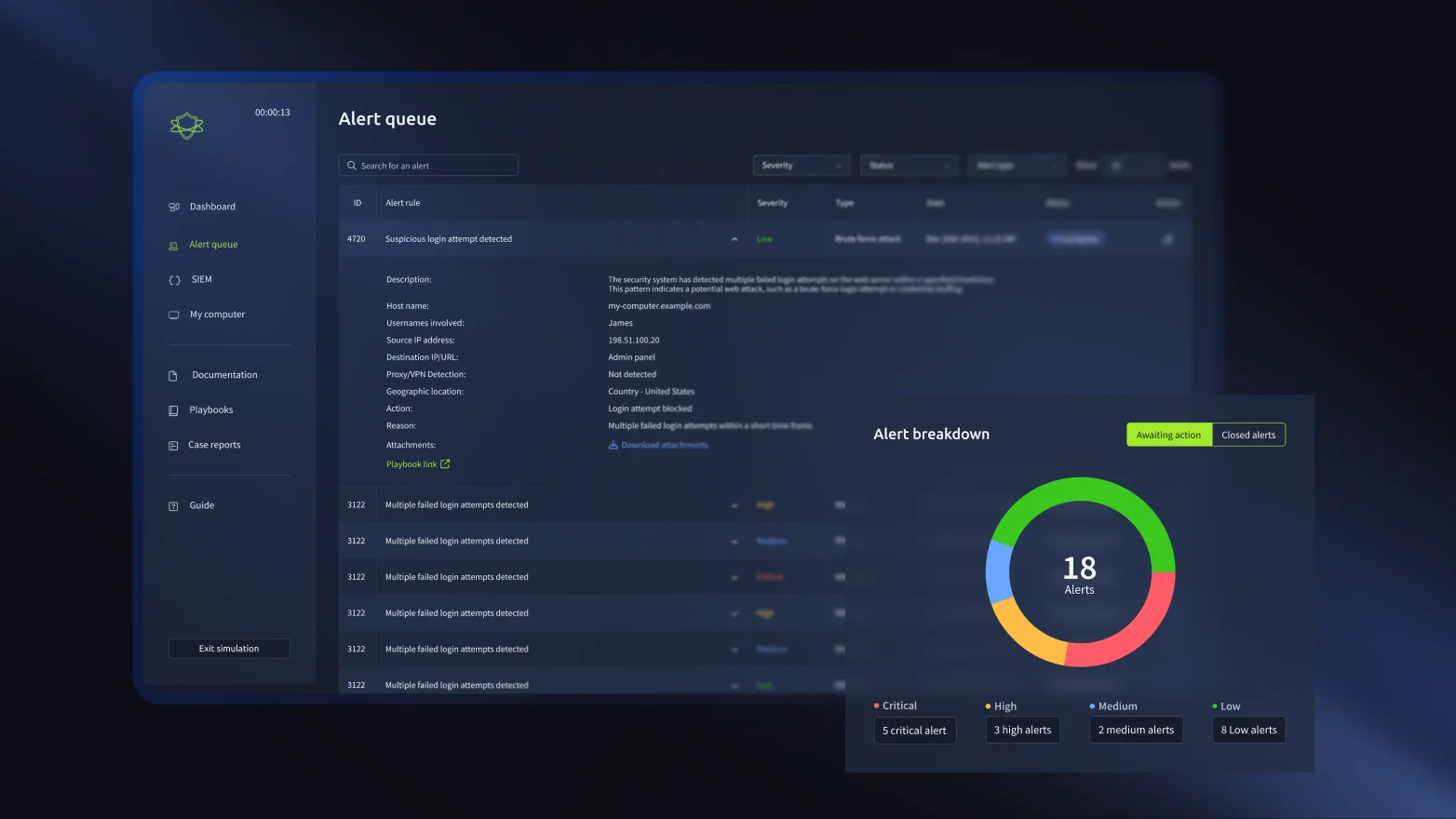
Investigate real activity
Give your team practical experience examining artefacts, following attacker activity, and piecing together the events behind an incident.
Cover every source
They can build experience across endpoint investigation, logs, file systems, memory, timelines, operating-system artefacts, and more, all within the context of an investigation.

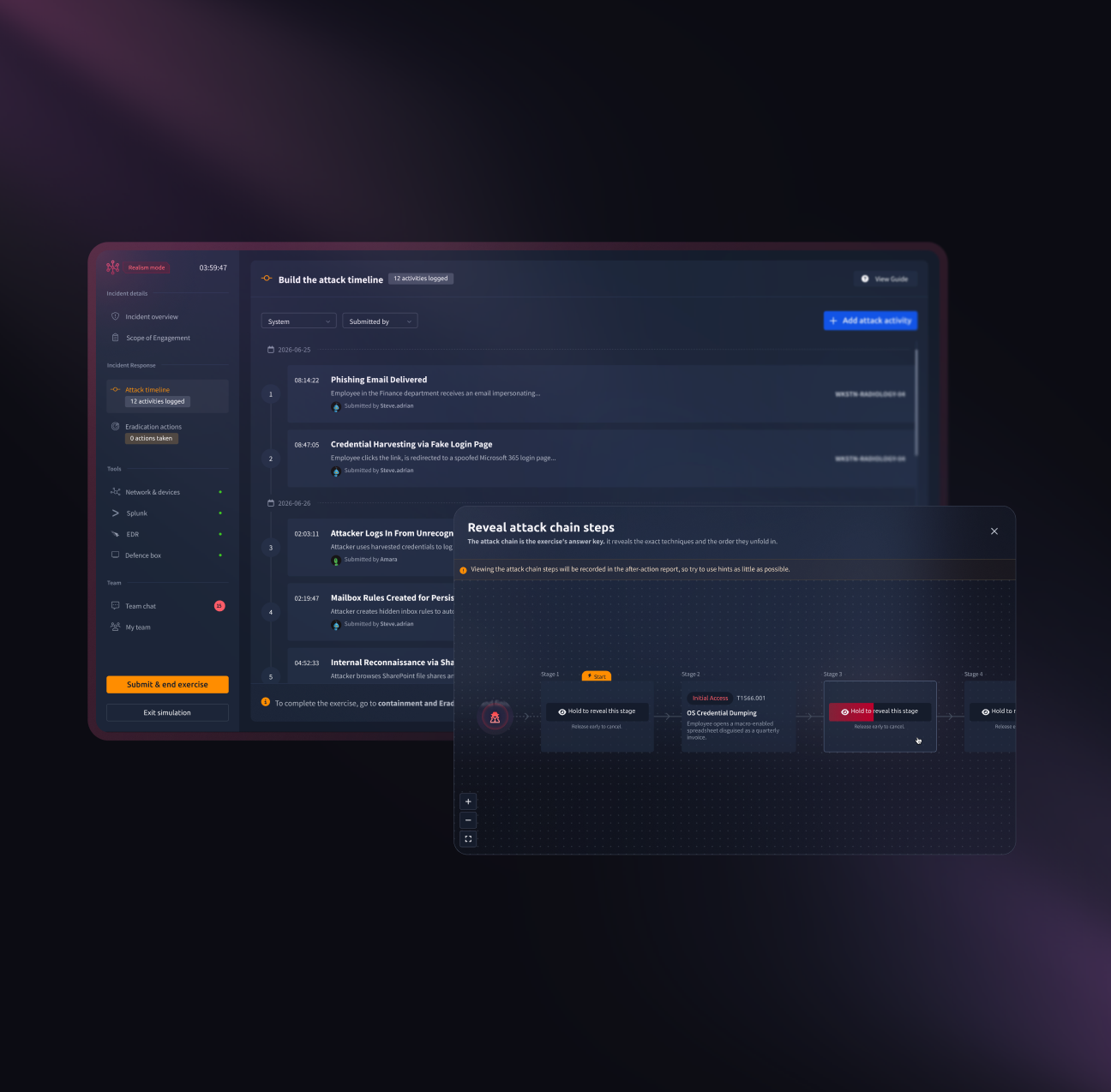
Move from findings to action
Make a plan
Investigation is only useful if your team knows what to do with what they find.
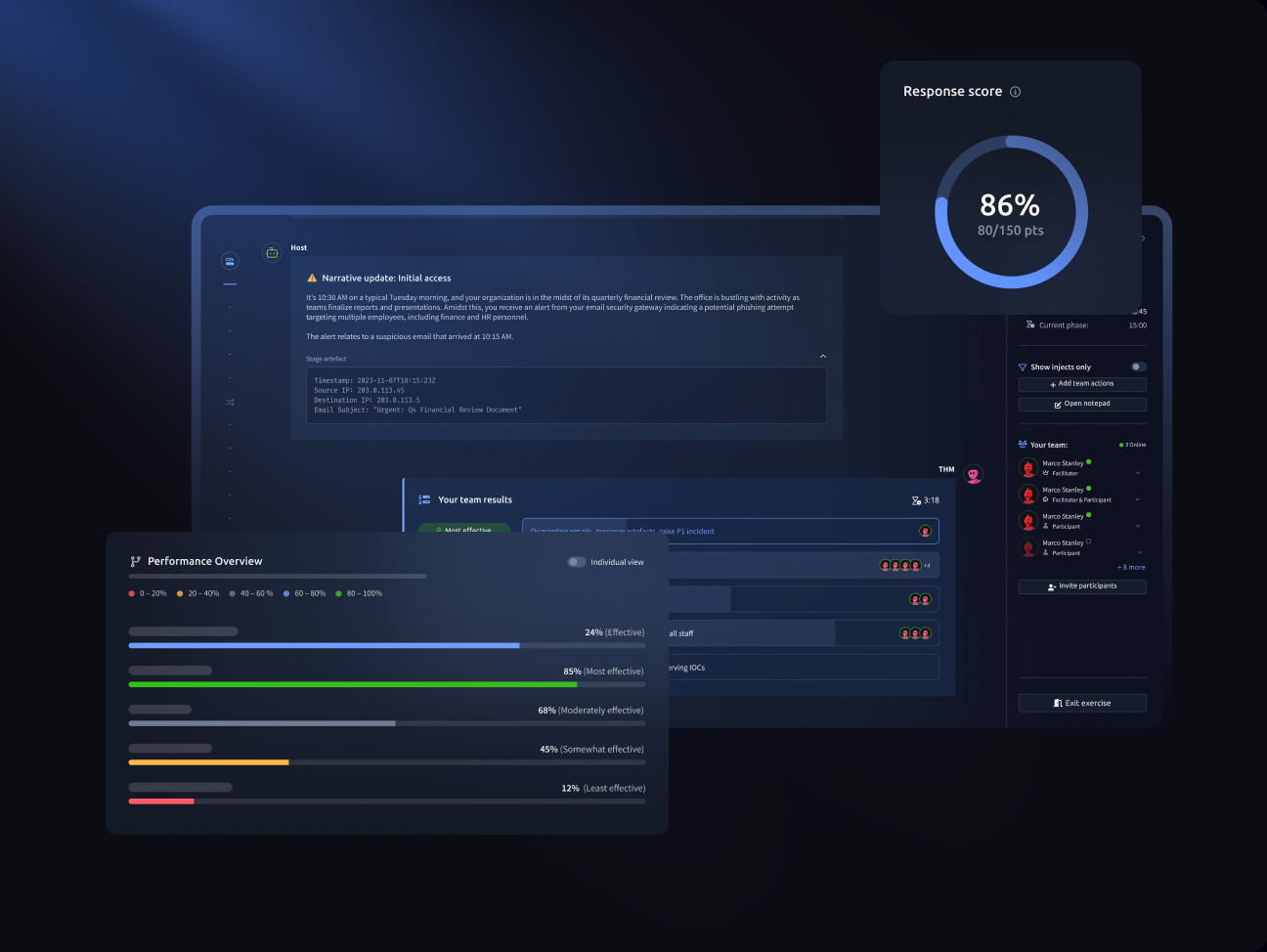
Work the full response
Practice working through the incident response lifecycle — from detection and analysis through containment, eradication, recovery, and lessons learned.
Build stronger judgement
Teams see how each decision affects what happens next, helping analysts develop the judgement needed when an incident isn't following a neat playbook.

DFIR training shouldn't stop at knowing the process
Real incidents build experience quickly. They're also a terrible training environment.
Traditional training can tell you...
What an artefact is
How incident response works
Which tools analysts use
The stages of DFIR
TryHackMe lets your team practice...
Finding the artefact that actually matters
Making decisions as an incident develops
Applying tools to realistic investigation scenarios
Connecting investigation and response from start to finish
What our clients say
The teams that train with us investigate faster, and can prove it to the people who need to know.

TryHackMe labs have a brilliant balance of theory and practice - explaining how cyber tools work and showcasing them in interactive real-world environments. It's a fun, straightforward platform with clear guidance, so it's easy to upskill independently. Bite-sized content is especially useful for training in between other priorities.
KPMG








Give your team somewhere to get it wrong before it matters
Build practical DFIR skills through hands-on investigations designed to develop stronger analysts and more confident responders.
Trusted by the world's leading DFIR teams


Loading...

Go from theory toproven capability
Explore how your security team can turn training into lasting impact across the whole organization