

OSI Model
Premium roomLearn about the fundamental networking framework that determines the various stages in which data is handled across a network
info

To access material, start machines and answer questions login.
The OSI model (or Open Systems Interconnection Model) is an essential model used in networking. This critical model provides a framework dictating how all networked devices will send, receive and interpret data.
One of the main benefits of the OSI model is that devices can have different functions and designs on a network while communicating with other devices. Data sent across a network that follows the uniformity of the OSI model can be understood by other devices.
The OSI model consists of seven layers which are illustrated in the diagram below. Each layer has a different set of responsibilities and is arranged from Layer 7 to Layer 1.
At every individual layer that data travels through, specific processes take place, and pieces of information are added to this data, which is what we'll come to discuss in the upcoming tasks within this room. However, for now, we only need to understand that this process is called encapsulation and what the OSI model looks like in the diagram below:
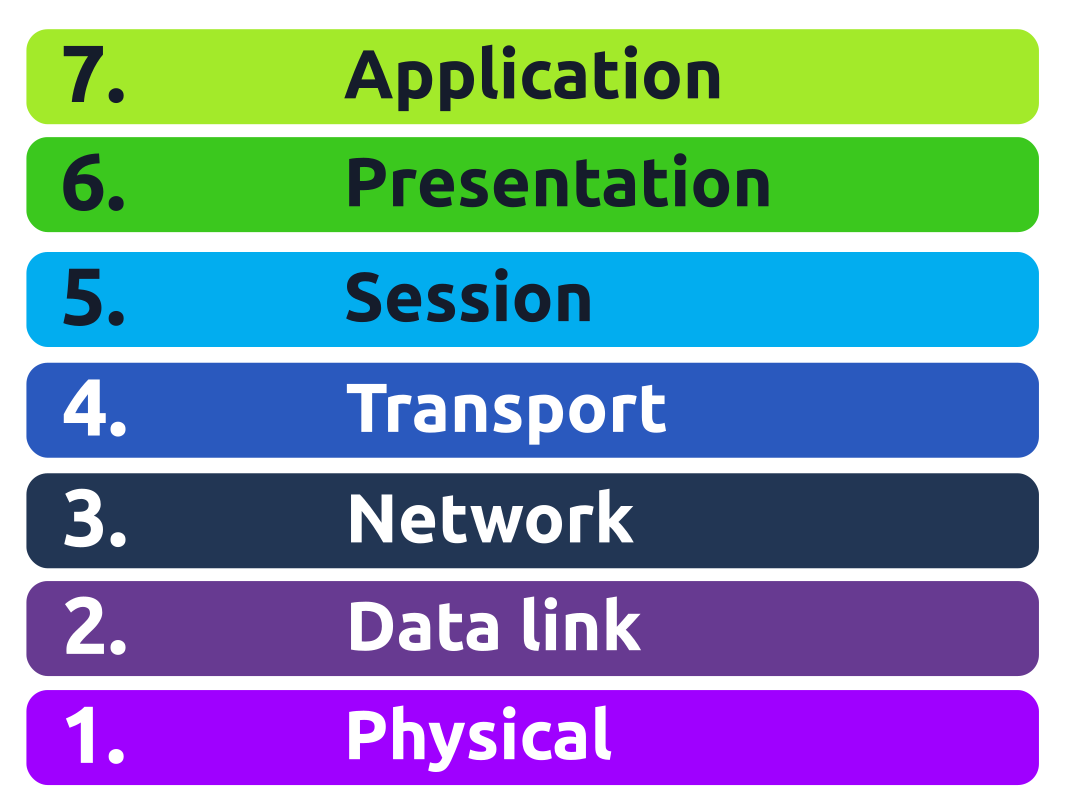
How many layers (in digits) does the OSI model have?
What is the key term for when pieces of information get added to data?
Ready to learn Cyber Security?
The OSI Model room is only available for Premium or Max subscribers. Signup now to access more than 500 free rooms and learn cyber security through a fun, interactive learning environment.
Already have an account? Log in