Task 1: Introduction To Digital Forensics
Forensics is the application of science to investigate crimes and establish facts. With the use and spread of digital systems, such as computers and smartphones, a new branch of forensics was born to investigate related crimes: computer forensics, which later evolved into, digital forensics.
Think about the following scenario. The law enforcement agents arrive at a crime scene; however, part of this crime scene includes digital devices and media. Digital devices include desktop computers, laptops, digital cameras, music players, and smartphones, to name a few. Digital media includes CDs, DVDs, USB flash memory drives, and external storage. A few questions arise:
- How should the police collect digital evidence, such as smartphones and laptops? What are the procedures to follow if the computer and smartphone are running?
- How to transfer the digital evidence? Are there certain best practices to follow when moving computers, for instance?
- How to analyze the collected digital evidence? Personal device storage ranges between tens of gigabytes to several terabytes; how can this be analyzed?
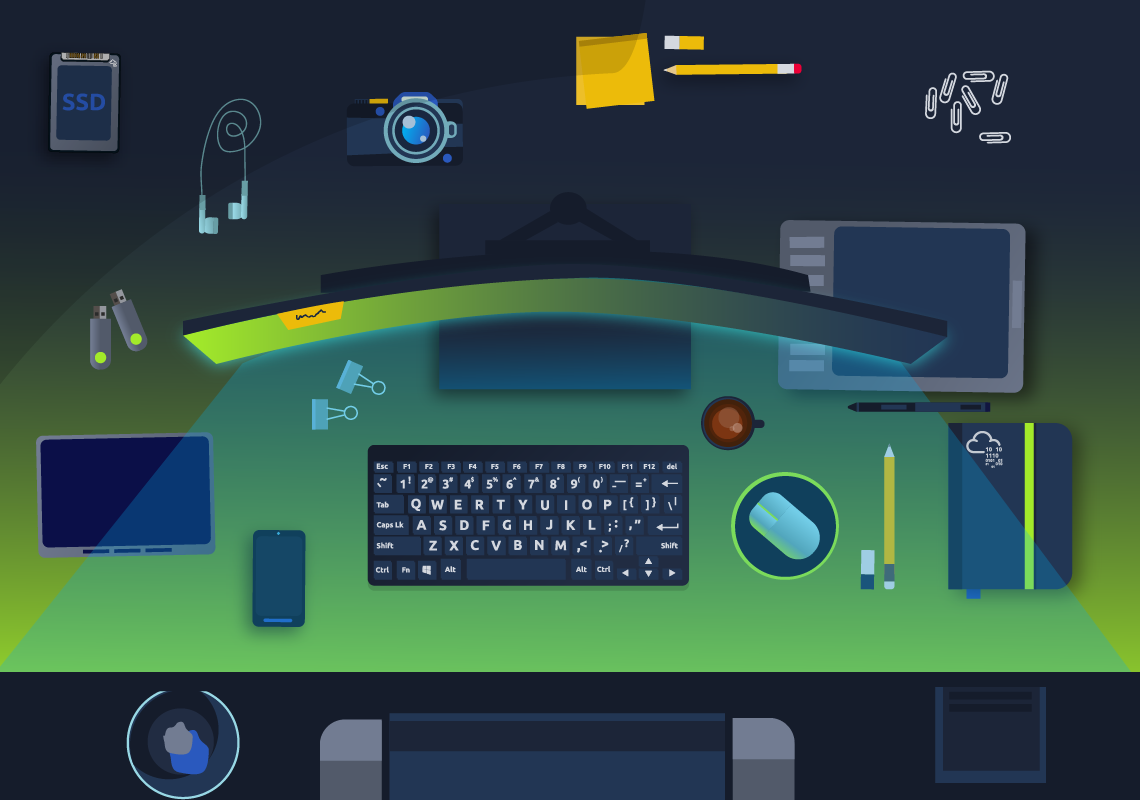
Assuming this employee is suspected in the figure above, we can quickly see the digital devices that might be of interest to an investigation. We notice a tablet, a smartphone, a digital camera, and a USB flash memory in addition to a desktop computer. Any of these devices might contain a trove of information that can help with an investigation. Processing these as evidence would require digital forensics.
More formally, digital forensics is the application of computer science to investigate digital evidence for a legal purpose. Digital forensics is used in two types of investigations:
- Public-sector investigations refer to the investigations carried out by government and law enforcement agencies. They would be part of a crime or civil investigation.
- Private-sector investigations refer to the investigations carried out by corporate bodies by assigning a private investigator, whether in-house or outsourced. They are triggered by corporate policy violations.
Whether investigating a crime or a corporate policy violation, part of the evidence is related to digital devices and digital media. This is where digital forensics comes into play and tries to establish what has happened. Without trained digital forensics investigators, it won’t be possible to process any digital evidence properly.
Answer the questions below
Consider the desk in the photo above. In addition to the smartphone, camera, and SD cards, what would be interesting for digital forensics?