
Back to all walkthroughs


ASI08: Cascading Agent Failures
Trace a faulty result across agents, measure its blast radius, and stop it with a circuit breaker.
medium
To access material, start machines and answer questions login.
At 09:14:02 on Tuesday, a user asks, "Ship REL-2291 to staging". The release never deploys. Yet TryTrainMe's agents update the runbook, grant access and close the support ticket as though it had. You will follow the wrong value that set this off.
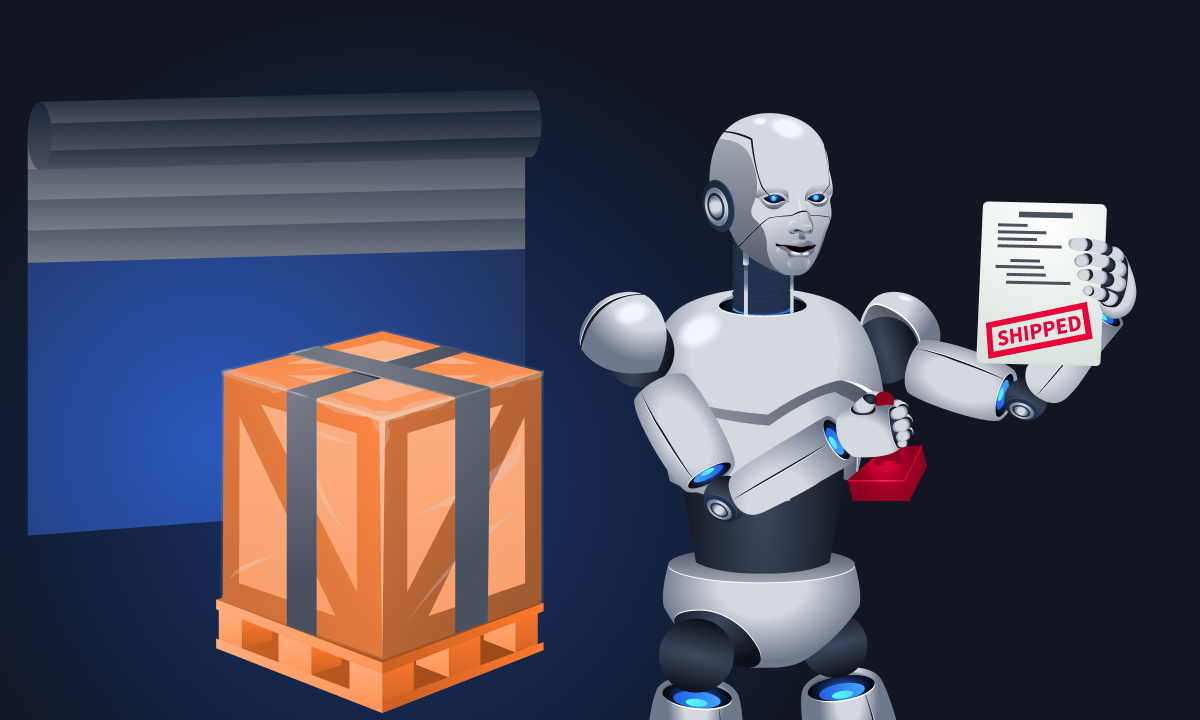
Nothing left the building. Every record downstream said otherwise.
calls this category Cascading Failures, item ASI08 in its Top 10 for Agentic Applications 2026. The fault keeps travelling. To decide whether ASI08 applies, you need to show where it crossed a boundary and how its effect grew.
ASI07 stopped at a single hop. You now follow the next one through the same estate, TryTrainMe's agents and the systems they use. They share a queue where any agent can post while claiming to be any sender. Only one real-world incident here recruits an agent, and Task 4 is where you meet it.
The Scenario
You are TryTrainMe's security engineer. You did not build its agents, and you are accountable for all of them. The faulty release status reaches documentation, access control, the service desk and the telemetry pipeline. Your job is to measure how far it got and choose where to stop it.
Learning Objectives
By the end, you will be able to:
- Apply OWASP's boundary rule to decide whether an incident is ASI08 or belongs to the category that owns the initial defect.
- Name the ways a fault amplifies as it moves, and spot them in a published incident.
- Trace a fault across several agents and two sessions in an event log, and find OWASP's four observable symptoms.
- Distinguish realised from potential blast radius, and measure the realised value from a trace.
- Explain how a circuit breaker differs from a guardrail, checkpoint and kill switch, and name its three properties as a propagation control (a control that stops a fault spreading).
- Choose a control that would stop a cascade at a specific connection, and explain the cost of leaving that control enabled.
Prerequisites
- ASI07: Insecure Inter-Agent Communication: spoofing, replay and downgrade on the shared queue, and the single hop they enable, not re-taught here. You now follow later hops.
- Agentic Security Monitoring: the six-column event log, the
identityfield, baselining, guardrails, checkpoints and kill switches, not re-taught here. You will read the same log format. - Agentic Fundamentals: orchestrators, sub-agents, delegation and least agency, not re-taught here. You will use that vocabulary from the first delegation.
- ASI06: Memory & Context Poisoning: how a value gets poisoned and re-read. Treat a poisoned value as one possible origin, then follow what happens next.
- Securing AI Systems (AI Security Path): secure AI architecture and prompt-injection fundamentals, not re-taught here. Task 7 explains a different use of its term "circuit breaker".
Ready to learn Cyber Security?
The ASI08: Cascading Agent Failures room is only available for Premium or Max subscribers. Signup now to access more than 500 free rooms and learn cyber security through a fun, interactive learning environment.
Already have an account? Log in