Task 1: Introduction
Security has become a buzzword; every company wants to claim its product or service is secure. But is it?
Before we start discussing the different security principles, it is vital to know the adversary against whom we are protecting our assets. Are you trying to stop a toddler from accessing your laptop? Or are you trying to protect a laptop that contains technical designs worth millions of dollars? Using the exact protection mechanisms against toddlers and industrial espionage actors would be ludicrous. Consequently, knowing our adversary is a must so we can learn about their attacks and start implementing appropriate security controls.
It is impossible to achieve perfect security; no solution is 100% secure. Therefore, we try to improve our security posture to make it more difficult for our adversaries to gain access.
The objective of this room is to:
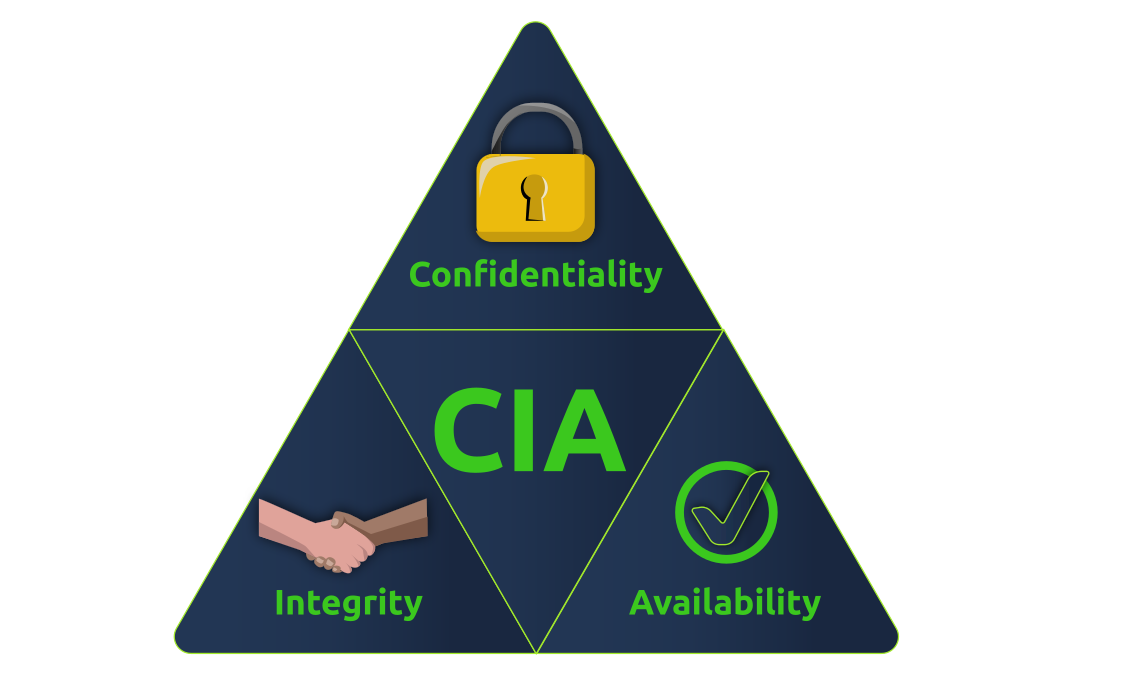
- Explain the security functions: Confidentiality, Integrity and Availability (CIA).
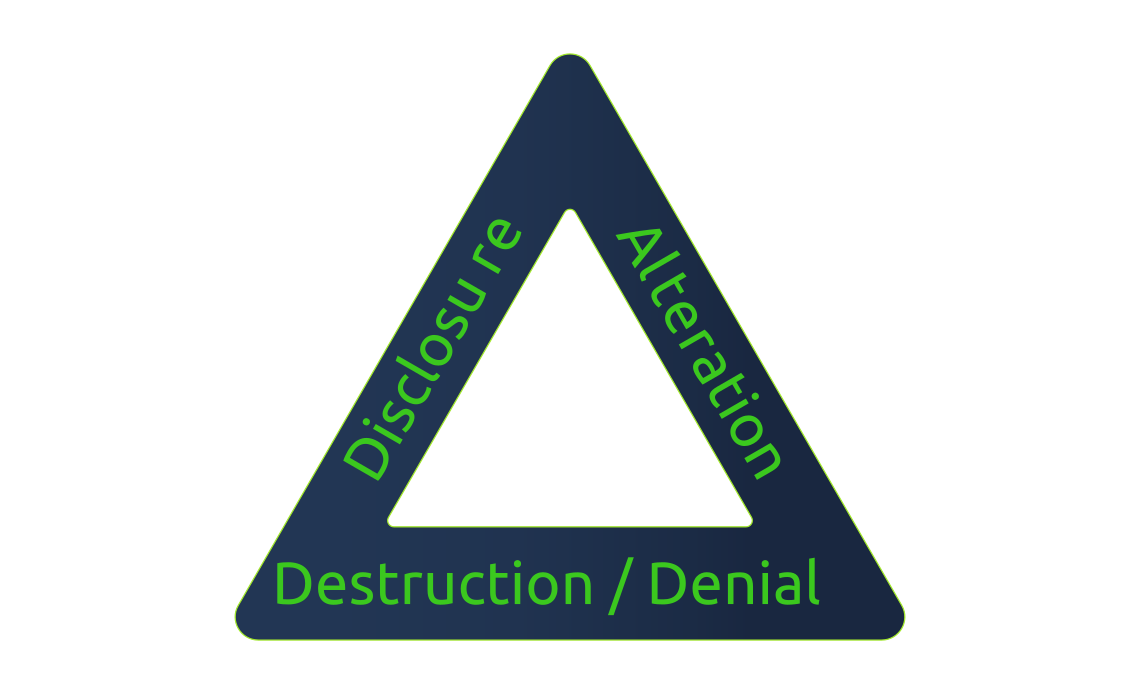
- Present the opposite of the security triad, CIA: Disclosure, Alteration, and Destruction/Denial (DAD).
- Introduce the fundamental concepts of security models, such as the Bell-LaPadula model.
- Explain security principles such as Defence-in-Depth, Zero Trust, and Trust but Verify.
- Introduce ISO/IEC 19249.
- Explain the difference between Vulnerability, Threat, and Risk.
Before we start, here are a few terms you will meet throughout this room:
- Asset: Anything of value that we want to protect, such as data, devices, or services.
- Vulnerability: A weakness that an attacker could exploit.
- Threat: A potential danger that could exploit a vulnerability.
- Risk: How likely a threat is to exploit a vulnerability, and how much damage that would cause.
- Security control: Any measure that reduces risk, such as a lock, a password, or a firewall.
The Threat versus Risk task explains vulnerability, threat, and risk in more detail.
Answer the questions below
- Think how you would describe something as secure.