Bypassing WAF


0%
WAF: Introduction
Learn about Web Application Firewalls and what differentiates them from other types of firewalls.
0%
WAF: Exploitation Techniques
Learn to bypass Web Application Firewalls using practical evasion techniques.
0%
Padelify
Use red-teaming techniques to bypass the WAF and obtain admin access to the web application.
0%
Farewell
Use red-teaming techniques to bypass the WAF and obtain admin access to the web application.
Topic Rewind Recap
Lock in what you learned with a recap. Earn points and keep your streak.
Master techniques to understand, exploit, and bypass WAFs, covering signature and pattern bypasses, parsing and normalisation evasion, protocol manipulation, and exploiting weak/outdated configurations.
This module will focus on the exploitation of Web Application Firewalls (WAFs), a crucial component of modern web security. We will first cover WAF fundamentals, including architecture, detection methods, rule creation, and limitations. We will examine how WAFs detect malicious traffic, distinguish between signature and behavioural analysis, and enforce filtering rules. We will also cover hands-on exploitation, targeting outdated OWASP CRS versions, weak configurations, and various evasion techniques like signature manipulation, parsing and normalisation bypasses, and protocol-level exploits to evade detection. The module concludes with two real-world challenges where you can apply these techniques to analyse, bypass, and exploit WAF protections in realistic environments.
Need to know

Web Hacking Fundamentals
Understand the core security issues with web applications, and learn how to exploit them using industry tools and techniques.

Advanced Client-Side Attacks
Through real-world scenarios, you will gain a detailed understanding of client-side attacks, including XSS, CSRF, DOM-based vectors, SOP, and CORS vulnerabilities.

Advanced Server-Side Attacks
Master the skills of advanced server-side attacks, covering SSRF, File Inclusions, Deserialization, Race Conditions, and Prototype Pollution.
Next steps

Custom Tooling
Build and automate custom tools (including AI-driven) using Python, Burp Suite, and browser automation to exploit and test web applications efficiently.

Attacking LLMs
Learn to identify and exploit LLM vulnerabilities, covering prompt injection, insecure output handling, and model poisoning.
What are modules?
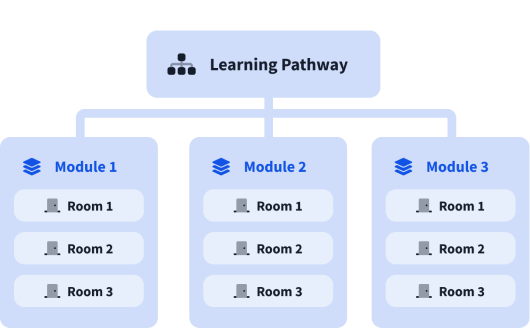
A learning pathway is made up of modules, and a module is made of bite-sized rooms (think of a room like a mini security lab).